
february
How Silkline modernized manufacturing procurement with Kernel
Silkline built AI-powered browser automations with Kernel to replace brittle punchout integrations, cutting procurement checkout effort by 80% and shrinking implementation from 6 weeks to 10 minutes compared to conventional methods.

80%
reduction in checkout effort for COTS orders
~6,000x
less engineering time to implement
“I tried Kernel, and I was like, holy ****, this is actually great. It was everything we needed to build the modern procurement experience I envisioned for our customers.”
Brent Shulman, Founder & CTO, Silkline
Silkline is a supply chain platform that helps manufacturers and hard-tech companies procure materials for everything from large satellites and electric motors to precision aerospace components and AI-guided robotics. They’re trusted by organizations like K2 Space, Castelion, H3X, Astranis, Antares, and other companies building mission-critical hardware.
Before using Kernel, many industry practices were stuck in the past. Brent and the team were intent on setting the new bar for what was possible.
Problem: Procurement stuck in 1999
As the internet and e-commerce took hold in the late 90s, organizations needed a way to buy parts online, but still comply with their approvals and budgeting rules. Procurement teams adopted a complex cXML standard called “punchout” so engineers could shop on suppliers’ e‑commerce sites such as McMaster-Carr, Amazon, and Digi-Key while still routing purchase orders (POs) back through their e‑procurement system. Here’s how the protocol works:
- Start from your e-procurement system, choose from the list of available suppliers
- You’re "punched out" to the supplier’s custom-built page (made to look like their normal e-commerce site), and fill a cart
- That cart is sent back to your procurement system (via cXML), where it awaits approvals. Once approved, the order will be checked out.
A picture is worth a thousand words here. Here is an example of the process from another vendor:
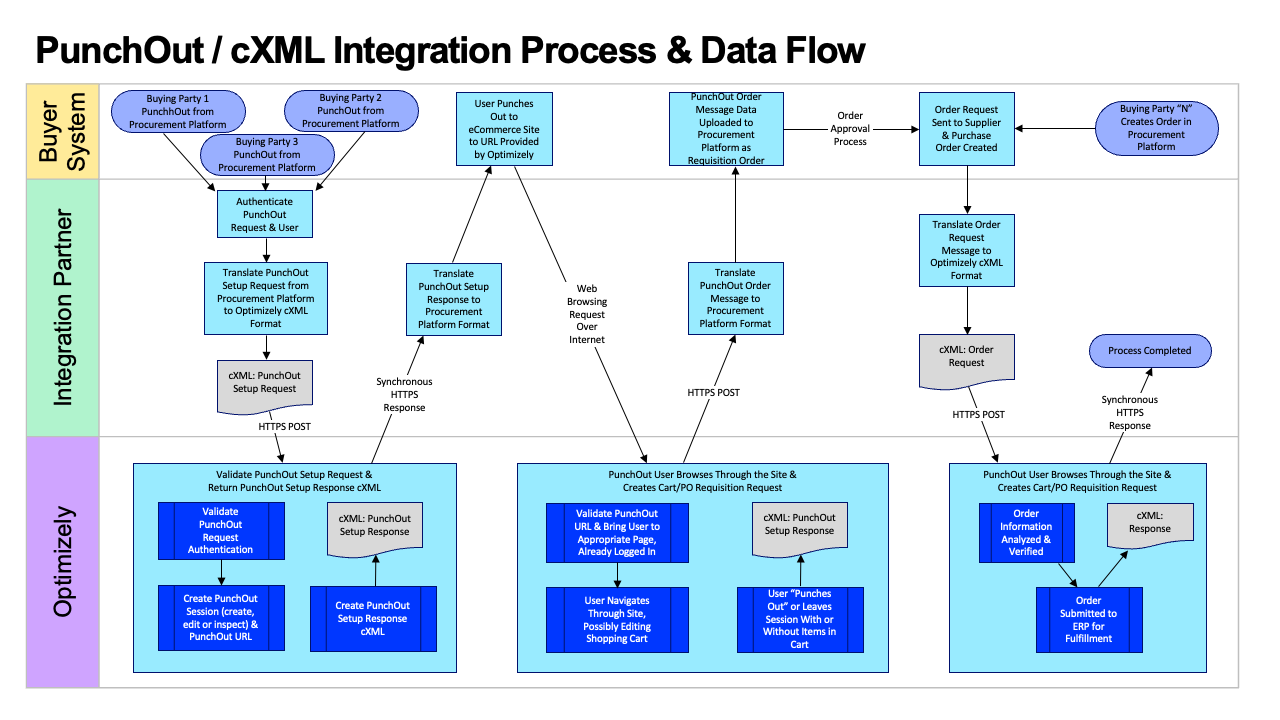
It works, but it’s a 1999‑era approach built on gnarly cXML exchanges that are hard to extend. Worse, implementing these integrations is cumbersome: each customer-supplier pair requires a separate integration. That upfront cost makes the whole setup slow to roll out, brittle to change, and hard to scale across new suppliers. Brent and the team wanted to offer something meaningfully better than the status quo.
“The question I posed to the team was, ‘How can we build a product that accomplishes the core features with a 10x better implementation and user experience? What exists in 2026 that is fundamentally different than 1999 that we can use to our advantage?’”
Brent Shulman, Founder & CTO, Silkline
In 2026, we have one thing that simply didn’t exist in 1999: AI-powered browser automations.
“After exploring different technical options, we wondered, could we do it in a fundamentally better way using browser infrastructure?”
Brent Shulman, Founder & CTO, Silkline
To explore this technical option without requiring their engineers to manage additional infrastructure, they needed an infrastructure provider.
Solution: Selecting Kernel to modernize a 30-year-old checkout experience
The Silkline team came in with a very specific bar for any infrastructure provider.
- The live view had to feel as smooth as a local browser, or their customers simply wouldn’t use it.
- They wanted a clean, full-screen kiosk-style integration with no headers, plus full control over cursor visibility so there’s never a distracting “second mouse.”
- Purchase approvals often sit for roughly 48 hours, and they didn’t want to be paying for unused time. So the team also needed a way to pause the browser during that idle window, then resume exactly where it left off and complete checkout autonomously once approval was granted.
- On top of that, they needed reliable replays so procurement teams could audit every step from “not checked out” to “fully checked out,” a way to avoid users ever having to manually solve CAPTCHAs,
- Finally, a way to manage login credentials and re-authenticate, so customers weren’t required to log in every time they ordered.
This was a checklist long enough to feel like its own custom product roadmap. Nevertheless, after a single discussion with our team, it quickly became clear that we had a solution for all his problems — except one. At the time, we didn’t yet offer managed auth to manage login credentials and re-authenticate, but we were in the middle of building it, gathered extensive feedback from the Silkline team as early design partners, and have just recently released it. With the final piece shipped, Silkline had everything they needed to deliver the modern procurement experience they set out to build.
“We’ve loved working with Kernel. The product is blazing fast, and so is their team. It feels like every request already has a solution queued up and ready to ship. I know we aren’t their only customer, but sometimes it sure feels like it.”
Jack Zeiders, Founding Engineer, Silkline
Results: 80% reduction in checkout effort
Today, Silkline runs its AI-powered browser automations on Kernel, delivering a fast, modern procurement experience for customers. After approvals are complete, checkout happens autonomously, so users no longer need to return later to review and manually check out. This reduced checkout effort for COTS orders by 80%.
Also, instead of standing up and maintaining separate punchout integrations for every customer–supplier pair, Silkline’s team configures a single automation flow on Kernel that can be reused across accounts and suppliers, dramatically shrinking implementation effort from 6 weeks to 10 minutes.
If you’re looking to update your outdated workflows, let us help. We have the answer.